
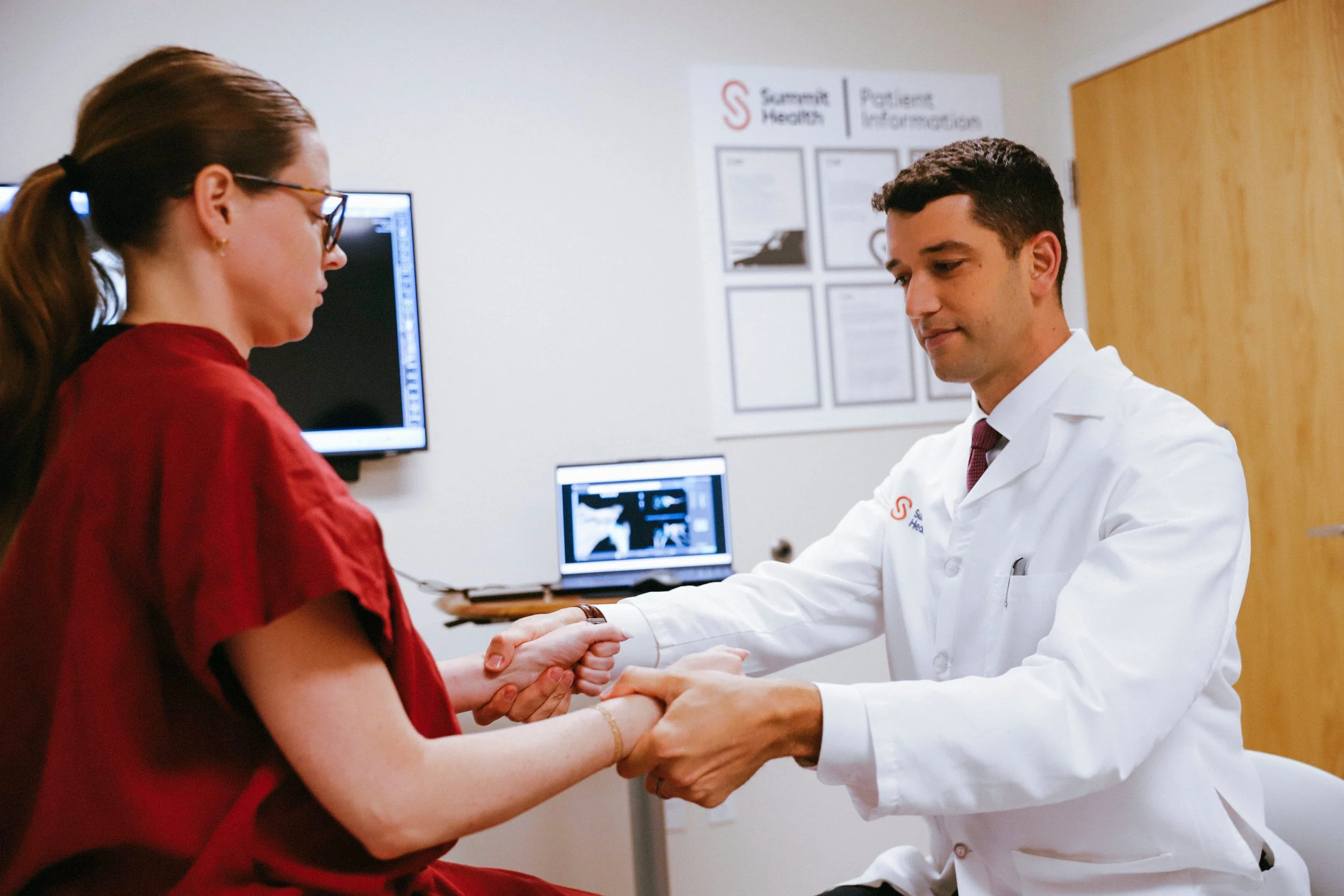
Shoulder conditions
Pectoralis major ruptures
A tear of the large chest muscle where it attaches to the arm, most often a weightlifting injury that frequently benefits from surgical repair.
Chest muscle tear
Common in lifters
Often surgically repaired
What is a pectoralis major rupture?
The pectoralis major is the large muscle of the chest that powers pushing and bringing the arm across the body. A rupture is a tear of this muscle, usually where its tendon attaches to the upper arm bone.
It most often happens during a heavy bench press, when the muscle is loaded while stretched. In active patients, surgical repair generally restores the most strength and the best appearance.
Overview
At a glance
Time matters
Pectoralis ruptures are best repaired early, before the torn tendon scars and retracts. Prompt evaluation gives the strongest result.
Symptoms & signs
Signs of a pec rupture
The injury is usually sudden and dramatic.
A sudden pop or tearing sensation in the chest during a heavy lift
Severe pain and immediate weakness pushing the arm forward
Extensive bruising across the chest, armpit, and upper arm
A visible change in the contour of the chest
A bunched-up or asymmetric look to the pectoral muscle
Causes & risk factors
What causes them
Almost all occur with heavy resistance loading.
Heavy bench press
The classic cause, loading the muscle while it is fully stretched.
Sports & falls
Forceful contact or a fall onto the arm can tear the tendon.
Sudden overload
Any sudden, forceful demand on a stretched muscle can rupture it.
Active adults
Most common in strength-training men in their 20s to 40s.
Treatment options
How pec ruptures are treated
Active patients are usually best served by surgical repair; partial tears may be managed non-surgically.
- Considered for partial tears or lower-demand patients
- Rest, ice, and a sling early on
- A gradual strengthening program
- Accepts some loss of pushing strength
- The torn tendon is reattached to the arm bone
- Best done early, before the tendon retracts
- Restores pushing strength and chest contour
- Preferred for active and strength-training patients
Recovery
What recovery looks like
Recovery after repair is staged over several months.
Protect
A sling protects the repair while the tendon heals to bone.
Restore motion
Therapy gradually returns full shoulder motion.
Strengthen
Progressive strengthening rebuilds pushing power.
Return to lifting
A staged return to full strength training and sport.
FAQ
Common questions
-
Active patients who want full pushing strength and a normal chest contour usually do best with repair, ideally performed soon after the injury.
-
The sooner the better, repairing within the first few weeks, before the tendon scars and retracts, gives the strongest, most reliable result.
-
Most patients return to full strength training after a staged rehabilitation, regaining strength and appearance.
Related procedures