
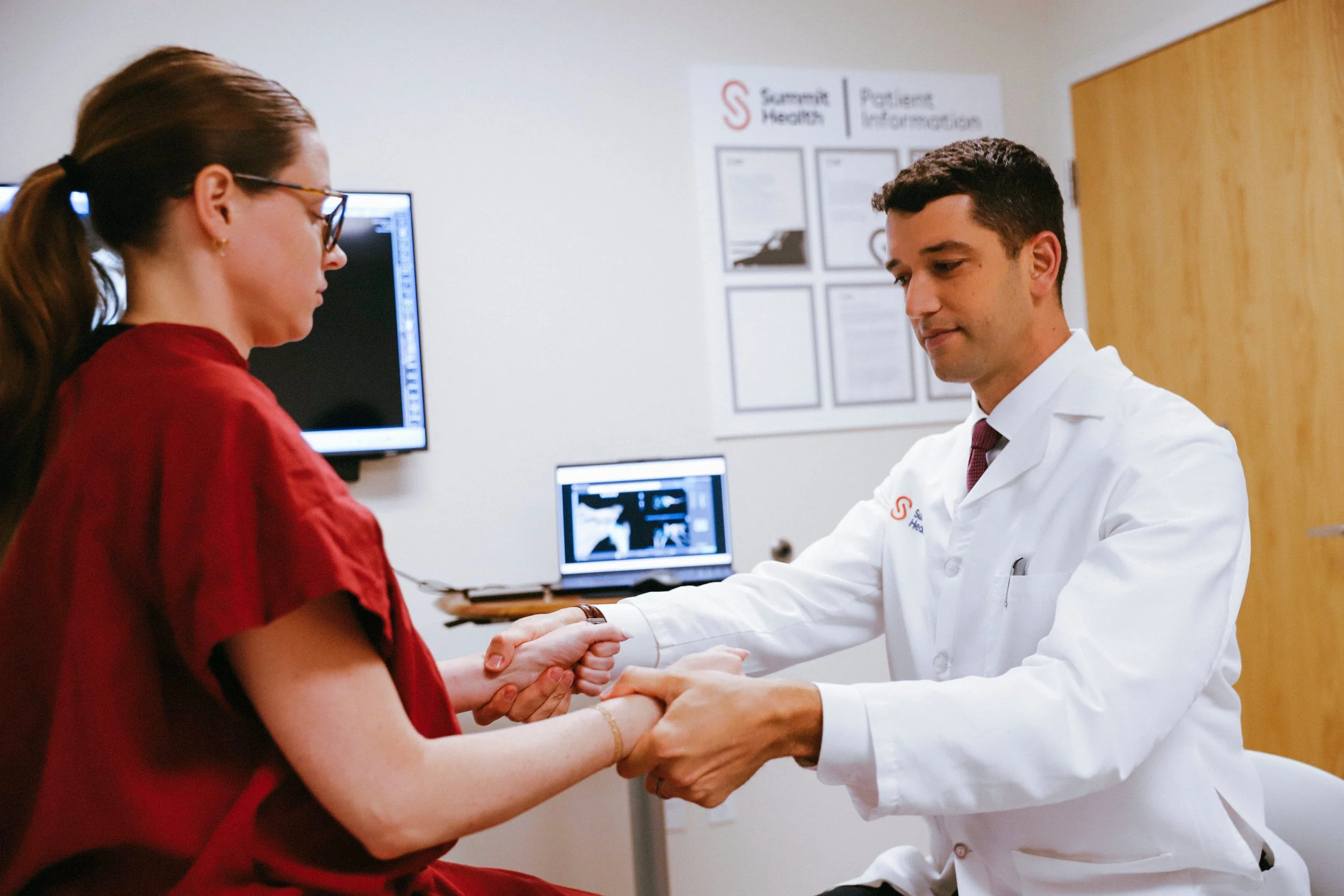
Elbow conditions
Elbow ligament injuries
Sprains and tears of the ligaments that hold the elbow steady, on the inner side from throwing and on the outer side from falls and dislocations.
Ligament sprain or tear
Throwing and dislocations
Often settles without surgery
What is an elbow ligament injury?
Two ligament complexes keep the elbow stable. The ulnar collateral ligament (UCL) runs along the inner side and resists the force of throwing. The lateral collateral ligament (LCL) runs along the outer side and holds the joint together when the arm is loaded in a fall or twisted in a dislocation.
An injury can be a stretch, a partial tear, or a complete tear. UCL injuries build up in throwing athletes over many pitches, though they can also tear in a single throw. LCL injuries are usually sudden, from a fall onto an outstretched hand or an elbow that comes out of joint. Many of these injuries settle without surgery. The ones that need a procedure are those where the elbow stays loose or painful.
Overview
At a glance
Which side matters
Inner-side pain in a thrower and outer-side looseness after a dislocation are different problems, and they are treated differently.
Symptoms & signs
How it feels
Pain usually sits on one side of the elbow, and the joint can feel unreliable.
Pain on the inner side of the elbow when throwing, often at the point of release
Pain on the outer side after a fall or a dislocation
A sense that the elbow is loose, shifting, or about to give way
Loss of throwing speed or accuracy, or difficulty pushing up from a chair
Tingling into the ring and little fingers, when the nearby nerve is irritated
Causes & risk factors
What causes it
Repeated throwing loads the inner ligament; sudden trauma injures the outer one.
Throwing
Pitching and overhead throwing put high, repeated stress on the UCL.
Volume and fatigue
Heavy throwing schedules with little rest raise the risk of a tear.
A fall on the arm
Landing on an outstretched hand can injure the ligaments on the outer side.
Elbow dislocation
When the joint comes out of place, the ligaments holding it are torn.
Treatment options
How it's treated
Treatment starts with rest and rehabilitation, and turns to surgery when the elbow stays unstable.
- A pause from throwing or loading the arm
- A brace or sling to settle the joint after an injury
- Therapy for the shoulder, forearm, and throwing mechanics
- A staged throwing program before a return to the mound
- Repairing the torn ligament directly, sometimes with an internal brace
- Reconstructing the UCL with a tendon graft when repair is not possible
- Restoring stability so the elbow can take load again
- Considered for a persistently loose or painful elbow, or a thrower returning to sport
Related procedure
UCL reconstruction and LCL repair are both covered under elbow ligament repairs.
Recovery
What recovery looks like
Recovery is staged, and throwing is the last thing to come back.
Settle the joint
Rest from throwing or loading, with a brace or sling for comfort.
Restore motion
Therapy returns full bend and straightening without stressing the ligament.
Strengthen
Strengthening works up the chain, from the forearm through the shoulder.
Return to throwing
A graduated throwing program builds distance, then intensity, usually over about six weeks.
FAQ
Common questions
-
No. Many partial injuries settle with rest, therapy, and a change to throwing volume. Surgery is considered when the elbow stays painful or unstable, or when a thrower needs it to compete.
-
The joint is put back in place and then checked for stability. Many dislocated elbows are stable afterward and treated with early motion, while some need the ligaments repaired.
-
Most throwers with a low-grade partial tear return to competitive throwing about three to four months after non-surgical treatment. After a UCL reconstruction, return to full competition usually takes twelve to fifteen months, and often longer for pitchers.
Related procedures